
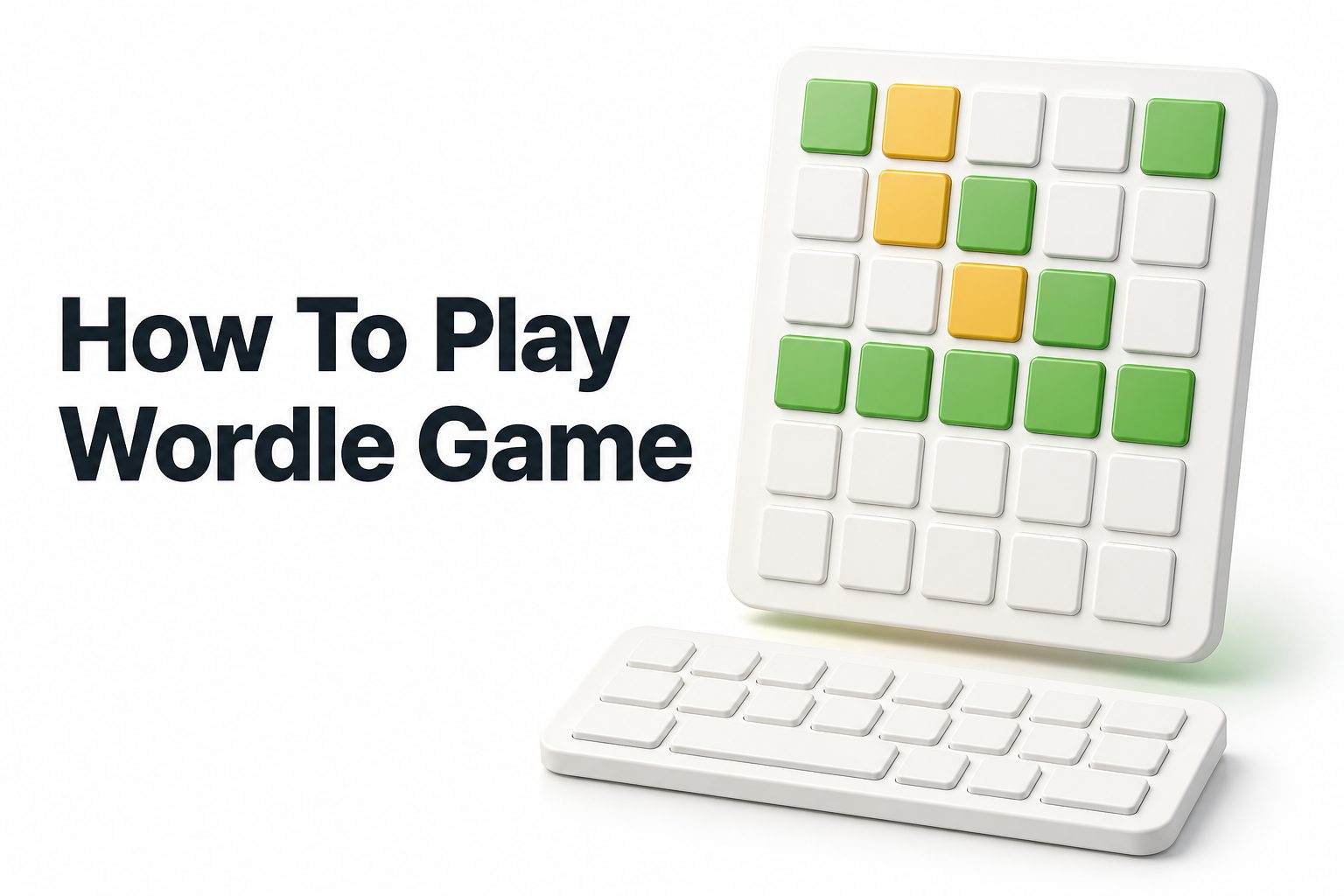
Wordle looks simple at first glance: guess a five-letter word within six attempts. Yet its appeal comes from the quiet challenge behind every choice. Each guess provides clues, and those clues gradually narrow the field until one word remains. It is quick enough for a coffee break but thoughtful enough to reward careful play.
If you are learning how to play Wordle game, the key is not having an enormous vocabulary. Success depends more on reading the colored tiles correctly, choosing useful words, and avoiding repeated mistakes. Once you know the basic rules, every daily puzzle becomes a satisfying exercise in logic, language, and pattern recognition.
The Basic Rules of Wordle
Wordle gives players six chances to identify a hidden five-letter word. Every submitted guess must also be a valid five-letter word. After each attempt, the game marks every letter with a color that shows whether it appears in the answer and whether it sits in the correct position.
The puzzle changes once per day in the original version, meaning everyone faces the same answer during that day. You can play casually, but the limited number of guesses creates useful pressure. Treat each guess as evidence gathering rather than simply trying random words that happen to sound plausible.
Reading the Green Yellow and Gray Tiles
A green tile means the guessed letter is correct and placed in the correct position. Keep that letter where it is in later guesses unless you are checking for duplicate letters. Green tiles are the strongest clues because they reveal both the letter and its location.
A yellow tile means the letter belongs in the target word but appears somewhere else. Move it to a different position on the next attempt. A gray tile usually means that letter does not occur in the answer, so avoid using it again unless the puzzle may include the same letter twice.
Important Wordle Color Clues
- Green letters stay in the same position.
- Yellow letters must move to another position.
- Gray letters are usually not part of the answer.
- A single gray copy of a letter does not always rule out a second copy.
- Later guesses should test what the earlier colors have revealed.
H2: Choosing a Strong First Guess
Your opening word matters because it can reveal several common letters at once. Good starting words often include frequent vowels and common consonants. Words such as “stare,” “crane,” “slate,” “trace,” and “arise” are popular because they test useful letter combinations without repeating letters.
There is no single perfect opening word for every player. Some prefer words with two vowels, while others value common consonants such as R, S, T, L, and N. The best first guess is one that helps you collect information quickly and gives you a reliable routine for future puzzles.
Using Your Second Guess Wisely
Your second guess should respond directly to the colors from your first word. If the first attempt produces only gray tiles, choose a new word with entirely different high-frequency letters. This lets you test more possibilities instead of wasting a turn on letters already shown to be absent.
When your opening word produces yellow or green tiles, build around them carefully. Keep confirmed positions, relocate yellow letters, and introduce fresh letters where possible. A second guess that tests several new options is often more valuable than one that focuses too narrowly on a single possible answer.
A Smart Early-Game Checklist
- Keep green letters fixed whenever possible.
- Move every yellow letter to a new position.
- Avoid gray letters in ordinary circumstances.
- Test unused vowels early if none have appeared.
- Prefer guesses with several new letters.
- Do not assume a word has only one repeated letter.
Managing Vowels and Common Consonants
Most five-letter English words contain at least one vowel, and many contain two or more. Early guesses should usually test A, E, I, O, and U across the first few turns. Finding vowels quickly makes it easier to identify likely word shapes and remove many impossible choices.
Consonants are just as important once the vowel pattern starts to emerge. Letters such as R, S, T, N, L, C, and D appear in many Wordle answers. If you know the word contains an A and E, testing familiar consonant patterns can turn a vague clue into a clear solution.
When to Test a Third Vowel
If your first two attempts reveal only one vowel, it can be worth using another guess to test additional vowels. This is especially helpful when you have little positional information. A word such as “audio” may feel unusual, but it can efficiently expose the puzzle’s vowel structure.
Do not overuse vowel-heavy guesses after several letters are already confirmed. Once the pattern becomes clear, shift toward likely consonants and word endings. The goal is always to make each turn more informative than the previous one, not merely to test letters in isolation.
Recognizing Familiar Word Patterns
English words often follow recognizable patterns, including endings such as “-er,” “-ed,” “-ly,” “-ing,” and “-est.” While Wordle uses five-letter answers, these patterns still help. For example, a word ending in “-ter” could point toward several choices, but the remaining letters quickly narrow the options.
Look at letter pairs as well as individual tiles. Combinations such as CH, SH, TH, ST, CR, and PL are common. If a yellow T and green H appear, consider whether they might form “TH” in another position. This kind of pattern awareness makes guesses more deliberate.
Avoiding Common Wordle Mistakes
One common mistake is using a known gray letter again without a specific reason. This often happens when players focus on finding a familiar word rather than following the evidence. Every unnecessary repeated letter reduces the amount of information you can gain from a valuable limited guess.
Another mistake is locking onto one answer too soon. A pattern such as “_ A _ E _” can produce many possibilities, and guessing them one at a time may fail. Instead, use a probe word that tests multiple competing letters before choosing the final answer.
Handling Double Letters Correctly
Double letters make Wordle more challenging because the color system can seem confusing at first. A word may contain two copies of the same letter, such as the two E letters in “eerie.” Your guess may show one copy as green or yellow while another copy appears gray.
Pay attention to how many times you guessed a letter and how many tiles received positive colors. If you used two L letters and only one turns yellow, the answer probably has one L. If both receive positive feedback, a repeated letter is likely part of the solution.
Wordle Facts That Prevent Costly Errors
| Situation | What It Usually Means |
|—|—|
| One green letter | The letter and position are correct |
| One yellow letter | The letter belongs elsewhere |
| Two positive tiles for one repeated letter | The answer may contain that letter twice |
| One gray repeated letter beside a positive one | The answer may contain only one copy |
| Several words fit one pattern | Use a testing word before guessing blindly |
Using Hard Mode as a Practice Tool
Hard Mode requires players to use revealed green and yellow clues in every later guess. If a letter is green, it must remain in that position. If a letter is yellow, it must be included somewhere else. This rule creates a more demanding and disciplined puzzle experience.
Playing Hard Mode can improve your ordinary Wordle performance because it builds better habits. You learn to respect every clue and avoid careless guesses. However, standard mode can sometimes be more strategic when several similar answers remain and a broader testing word would eliminate them faster.
Building a Reliable Personal Strategy
A consistent strategy reduces hesitation. Start with a word that contains useful letters, interpret the colors, then choose a second guess based on what is missing. By the third attempt, you should usually have enough information to begin forming realistic word patterns rather than testing blindly.
Keep your method flexible. Some puzzles reveal the answer quickly, while others contain unusual letters or duplicate characters. A strong player does not follow a rigid script; they adapt. The best approach combines a dependable opening routine with the willingness to change direction when the clues require it.
A Practical Six-Guess Framework
On the first guess, test common letters and vowels. On the second, add fresh letters or reposition yellow ones. By the third guess, aim to identify the word’s general shape. The fourth and fifth guesses should separate the few remaining plausible answers with targeted letter choices.
The sixth guess should rarely be a surprise if you have used the earlier turns efficiently. Before submitting it, check every color clue again. Confirm that no gray letters appear, all green letters remain fixed, and yellow letters have moved. A final review prevents many avoidable losses.
Learning From Daily Results
After a puzzle ends, take a moment to review where the process became difficult. Perhaps the opening word did not reveal enough vowels, or maybe you ignored a duplicate-letter possibility. Small observations from one game can improve the choices you make in the next one.
Sharing results with friends can also make practice more enjoyable. Compare approaches rather than only the number of guesses. One person may solve quickly through an effective starting word, while another may use better elimination logic. Both styles can offer useful ideas for future games.
Playing Wordle Without Spoiling the Answer
Part of Wordle’s charm is that every player works through the same daily puzzle independently. If you share your result, avoid typing the answer directly. The familiar grid of colored squares communicates the outcome while protecting the challenge for anyone who has not played yet.
Be cautious with social media, group chats, and search suggestions when you are still solving. Even a casual comment about an unusual letter can remove much of the fun. If you enjoy word puzzles regularly, try our [Internal Link: daily word puzzle tips] for more ways to sharpen your guessing skills.
Expanding Your Skills Beyond the Daily Puzzle
Wordle can improve pattern recognition, spelling confidence, and vocabulary awareness, especially when played thoughtfully. You will start noticing common letter combinations and word endings more easily. The game is not a substitute for formal language study, but it is a pleasant daily way to stay mentally active.
If you want additional practice, try Wordle-style games with unlimited rounds or different word lengths. These formats let you test new starting words without waiting for tomorrow’s puzzle. You can also read our [Internal Link: best online word games] to find similar games that reward careful language skills.
Practical Tips for Better Wordle Results
- Use a consistent starting word for several days before judging its value.
- Prioritize information over a lucky guess during early turns.
- Check for double letters whenever the clues seem contradictory.
- Consider common prefixes and endings once two or three letters are known.
- Slow down before your final guess and verify every colored tile.
- Keep the game enjoyable rather than treating every result as a test.
Why Wordle Remains So Popular
Wordle succeeds because it respects players’ time. One puzzle per day prevents endless scrolling and gives the game a pleasant sense of routine. The rules are easy to learn, but each answer offers enough variation to keep the experience fresh and satisfying.
It also creates conversation without demanding direct competition. People can compare score grids, favorite starting words, and close calls while keeping the solution private. That social element, combined with the simple design, explains why a small daily word puzzle has become a lasting habit for many players.
Making Each Guess Count
The difference between a frustrating Wordle round and a satisfying one often comes down to purpose. Before entering a word, ask what it will test. Will it move a yellow letter, confirm a likely ending, or rule out several competing answers? A clear purpose improves every decision.
As your skills grow, you will become faster at recognizing when a guess is inefficient. You may still miss difficult words, and that is part of the game. The real reward comes from making sound choices with limited information and watching the answer gradually take shape.
Conclusion
Learning how to play wordle game is mostly about turning color clues into useful decisions. Begin with a balanced five-letter word, pay close attention to green, yellow, and gray tiles, and use each new guess to test the most valuable remaining letters. Avoid repeating rejected letters, unless you are checking a duplicate-letter possibility.
A strong result does not require obscure vocabulary or complicated tricks. It comes from patience, practical elimination, and awareness of common English word patterns. Use a consistent opening approach, stay flexible when the puzzle provides unexpected clues, and review your choices after difficult rounds. With a little practice, you will solve more puzzles confidently while enjoying the small daily challenge that makes Wordle so memorable.
FAQ Section
How many guesses do players get in Wordle
Players receive six guesses to find the hidden five-letter word. Each submitted word must be valid, and the colored feedback after every guess helps narrow the remaining possibilities until the answer is identified.
What does a yellow tile mean in Wordle
A yellow tile means the letter appears in the answer but is currently placed in the wrong position. Use that letter again in a different spot while following the clues from all other tiles.
Can Wordle answers contain repeated letters
Yes, Wordle answers can include repeated letters. Watch how repeated letters are colored in your guesses, because one positive tile and one gray tile may indicate that the answer contains only one copy.
What is a good starting word for Wordle
A good starting word includes common vowels and consonants without repeating letters. Words such as “stare,” “crane,” and “slate” are useful because they test several high-frequency letters in one attempt.
Is Hard Mode better for improving Wordle skills
Hard Mode can improve clue-following discipline because confirmed letters must be used in later guesses. Standard mode remains useful for testing multiple possibilities when several answers share the same visible letter pattern.
0 Comments